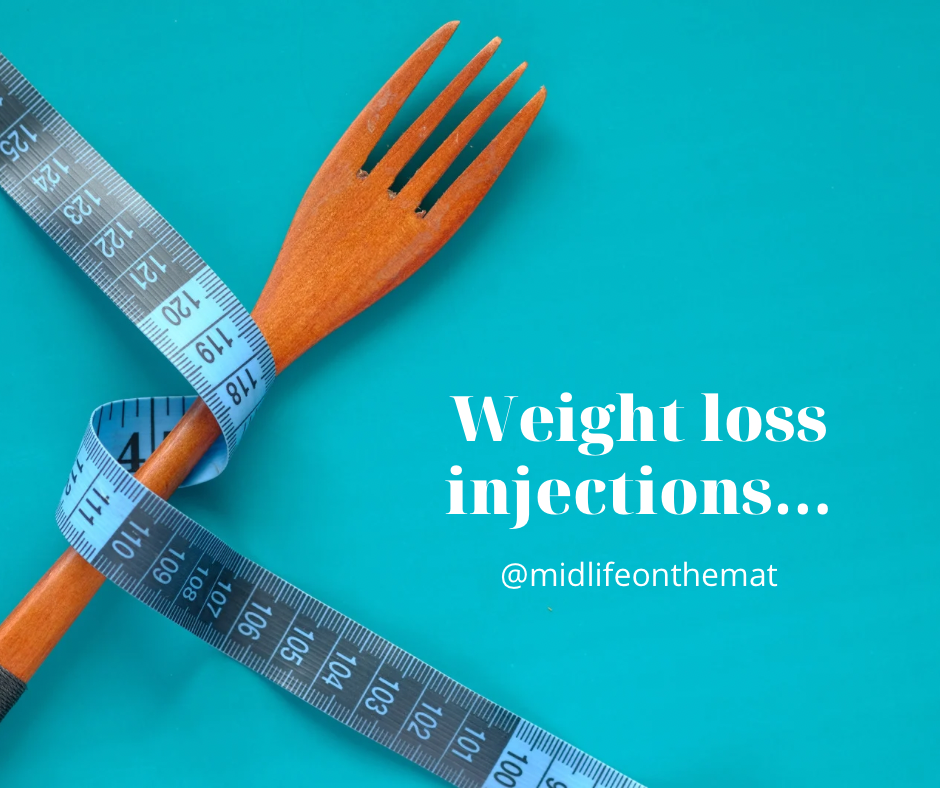
Weight loss injections
Donna Rawding | JUL 1, 2025
As a wellness professional I get asked about a lot of different things affecting women's health ranging from students trying to work out what is going on physically with their body to how to implement a better self care regime.
Over the last couple of weeks a few of my students have been talking about this so I thought I would share what I know and what I think about this.
So what are they?
GLP-1 medicines, which can be taken as tablets or as injections, are used to treat type 2 diabetes and can aid weight loss by reducing a patient’s appetite. These treatments are being rolled out into GP surgeries to particular cohorts of patients and can be purchased online.
Apparently they do work - with patients reporting between 6-20% weight loss through the treatment.
This raises such an important issue in the world of health and wellbeing. I’ve been very concerned hearing some of my students talk about people they know getting this online, as they are aware that they are ineligible under the NHS criteria.
My concern is how will this be regulated? How will the broader wellbeing needs of the patient be met? How will their treatment be monitored? There is real potential for abuse and I am struggling to find out any information about its long-term use, especially as the reported side effects (even at a prescribed therapeutic dose) can be serious for some individuals.
For midlife women in particular, I am concerned about the weight loss leading to losing even more muscle mass which impacts bone density putting women at higher risk of fractures or osteoporosis.
The evidence suggests that once you stop taking the medication/injections, the weight will creep back in the same way if you come off a diet.
On that basis, if you are considering going down this route I firmly believe the following:
A multi-component approach is absolutely vital. Nutrition, behavioural and psychological support, sleep and stress management (this directly impacts on weight management), and of course physical activity.
Consider therapy before you start taking it if you are a comfort eater. If food is your comfort, how will you obtain that comfort if your food intake drops dramatically?
Make stringent efforts to build muscle mass, always a consideration in weight loss, but even more so when losing large amounts of weight quickly as is often the case with these drugs.
Plan meals so that you eat plenty of protein and vegetables. If you are eating less, it’s vital that you ensure that what you do eat is nutritious and energy sustaining.
At this point in time, there are so many unanswered questions around the use of these drugs for sustained, lifelong weight loss. There is also huge scope for abuse and mis-use.
You will need to carefully consider the changes you want for you health and wellbeing. It is important for women to be informed so you can make the choice that is right for your body.
It will be incredible to see how the landscape of health is changed by these drugs, while never losing sight of the importance of healthy eating, exercise, connection to the great outdoors and a sense of belonging to the people around us. These are the pillars of a happy and healthy life - if weight loss drugs can help you on the journey, then great. However, they shouldn't be seen as a panacea or an alternative.
As with any weight loss programme - it is only sustainable with permanent nutritional change. The concern with these meds is those people who see them as a forever drug and just stay on them long term. That is not how they are meant to be used as long term dependence.
"A drug can suppress hunger, but it cannot nurture identity, motivation, resilience, or sustained lifestyle change".
Donna Rawding | JUL 1, 2025
Share this blog post
 OfferingTree